

In salmon pens, laser robots turn aquaculture into precision work
A Norwegian sea-lice story shows robots doing what humans cannot do at scale: watching thousands of fish and targeting tiny parasites before an outbreak spreads.
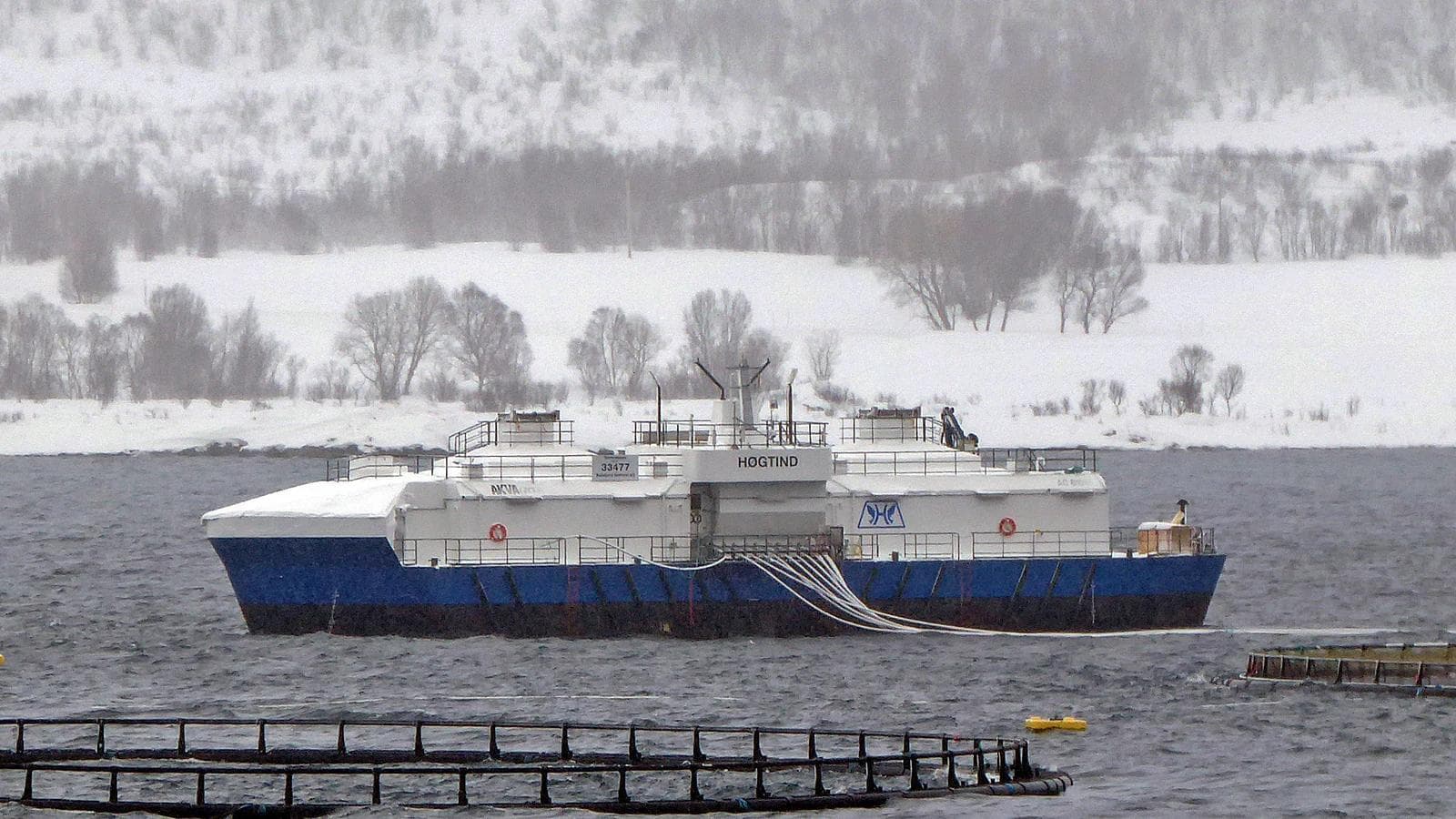
What this story shows
- Aquaculture robots can extend human perception in wet, remote, and data-rich environments.
- The Stingray system is strongest as prevention, not as a magic emergency fix.
- The adoption story is a combined system: cameras, lasers, cleaner fish, farm operations, and human stewardship.
Aquaculture's robotics story is not only about bigger farms. It is about finer control: underwater cameras, machine vision, and robots that can watch for problems long before a human crew could see them clearly.
WIRED's report on salmon farming in Norway centers on sea lice, a parasite that can damage farmed salmon, spread through dense pens, and threaten surrounding wild fish. The article follows Marine Harvest, now Mowi, as it tests new approaches to a problem that has grown harder as lice adapt to chemical treatments.
The robot under the cage
One of the most memorable tools in the story is Stingray, an underwater robot that watches salmon through live video and uses AI to identify lice on the fish. When it detects a target, it fires a diode laser at the parasite. The salmon's reflective scales are described as protecting the fish, while the louse absorbs the beam.
The system is not magic and the source reporting is careful about its limits. WIRED notes that the robot is better as prevention than emergency response, and that cleaner fish can still reach places the robot struggles with, such as around gills and fins. The point is the combination: old biological methods and new robotics working together.
The collaboration angle
This is human-robot collaboration at a different scale. The human job is not to inspect every fish with a flashlight. It is to manage a system: cameras, lasers, cleaner fish, cage design, sensors, and farm operations. The robot extends what the farm team can perceive and act on.
- The machine handles continuous underwater monitoring.
- Farm teams interpret results and decide how to manage pens, timing, and treatments.
- The technology supports a sustainability goal: fewer lice, fewer escapes, less waste, and less dependence on blunt chemical interventions.
“The best aquaculture robots do not replace stewardship. They make stewardship more precise.”
Why it matters for adoption
For buyers in primary industries, this is a powerful adoption narrative. Robots can operate in places that are wet, remote, repetitive, data-rich, and difficult for humans to inspect directly; the same logic sits behind monitoring categories such as security patrol robots. The outcome is not novelty; it is better monitoring, earlier intervention, and a more credible path toward sustainable production.
More stories
View all
Robs are great
Lorem ipsum dolor sit amet, consectetur
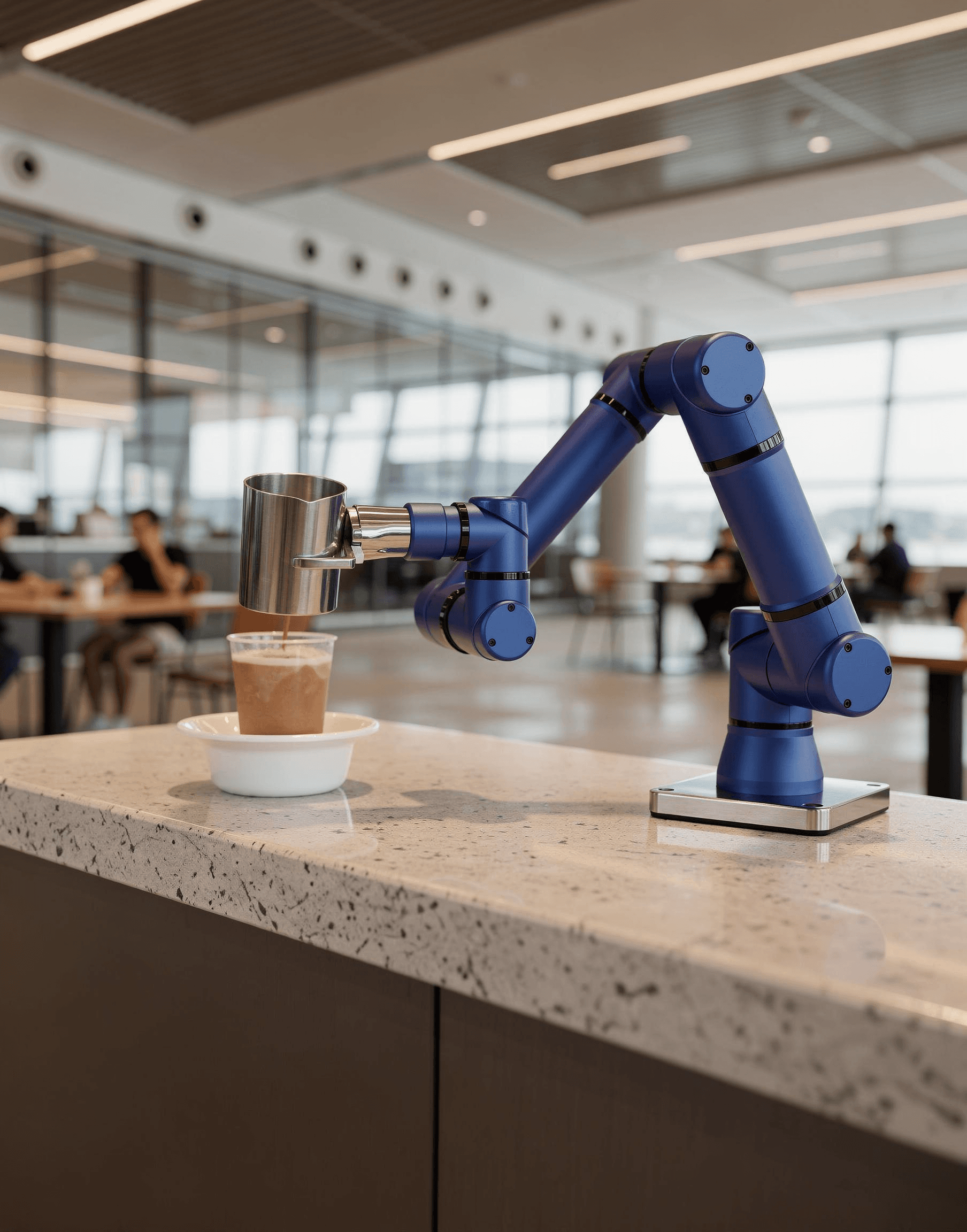
Robots are the future
Robots are the absolute future we have.
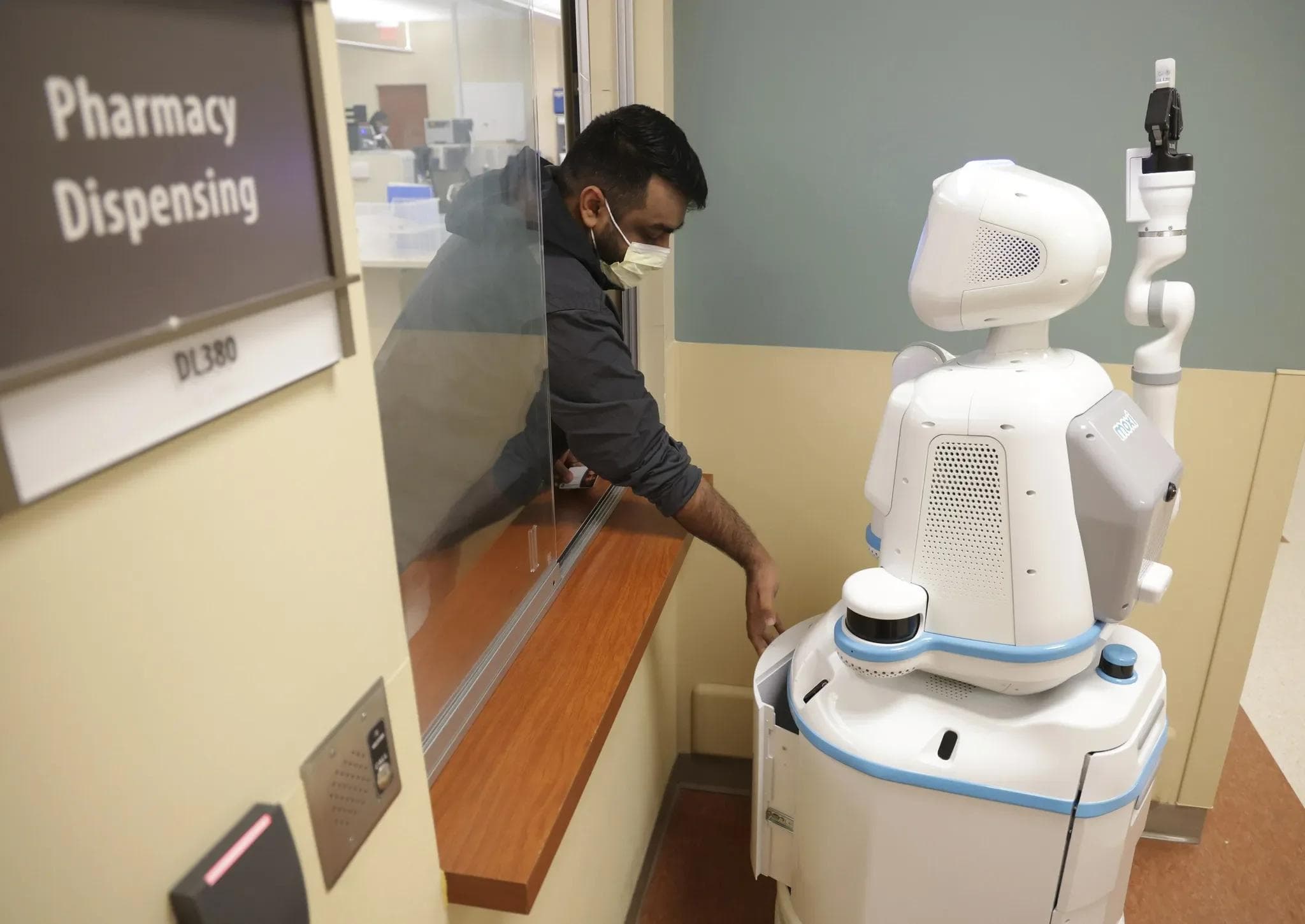
Moxi the hospital robot gives nurses time back
At Mary Washington Hospital, WIRED found a cleaner robotics story than spectacle: a mobile assistant taking routine delivery runs so nurses can stay closer to patients.